Driven by both policy incentives and market demand, the localization of imported medical products has become a core engine for promoting the high-quality development of China's pharmaceutical and healthcare industry. However, the complexity of regulatory adaptation, barriers to technology transfer, and differences in clinical needs make this integration process fraught with challenges. Zou Dingyuan, Vice President of Marketing at Hefei Xinzhou Pharmaceutical Co., Ltd., with over a decade of experience in the industry and practical experience in managing the entire supply chain, has become an industry expert in overcoming the localization dilemma. Through precise planning and pragmatic actions, he has built a smooth bridge between imported medical products and the Chinese market.
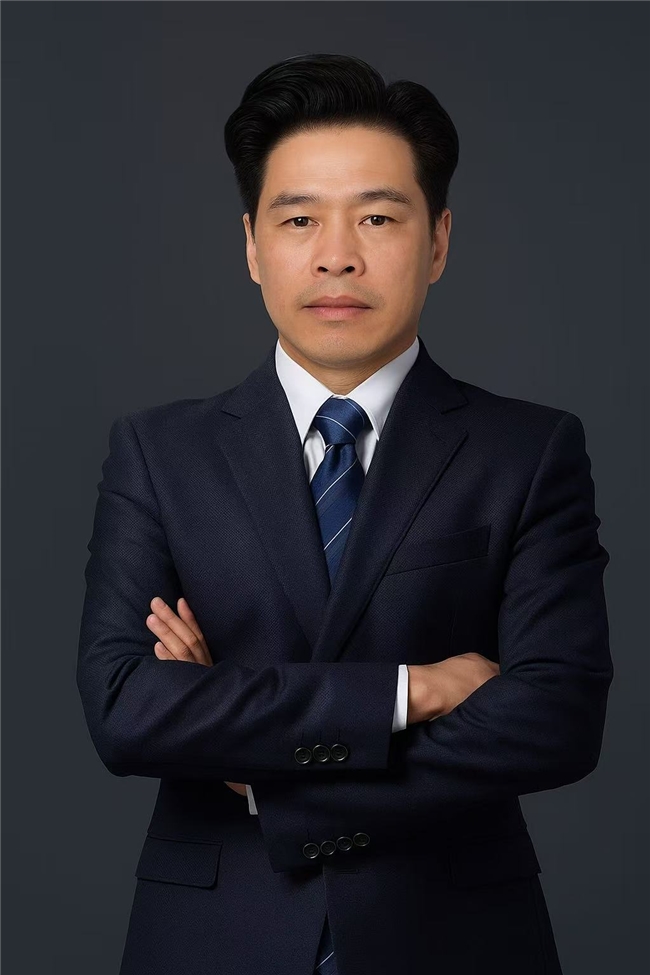
Since the establishment of Hefei Xinzhou Pharmaceutical in 2016, Zou Dingyuan has grown alongside the company, witnessing and participating in the wave of localization of imported medical products in China. As a core enterprise under Hongcheng Medical, Xinzhou Pharmaceutical has gradually expanded from initial medical product sales to diversified businesses including pharmaceutical wholesale, Class III medical device operation, and technology transfer and promotion. Holding 14 administrative licenses and 9 qualification certificates, it has participated in over 200 bidding projects, serving medical institutions at all levels and the health sector. Throughout this development, Zou Dingyuan has always been at the forefront of the market, deeply understanding the core pain points of imported products' "incompatibility" with the Chinese market—from policy bottlenecks in reference preparation identification to the gap between product design and the characteristics of Chinese patients, and the disconnect between the supply chain and clinical application. He firmly believes that localization is not simply "import substitution," but rather a comprehensive integration of regulations, technology, production, and marketing, centered on the needs of the Chinese market.
In the field of regulatory compliance and localization, Zou Dingyuan can be considered the company's "policy navigator." Faced with the challenges of complex registration processes and frequent policy updates for imported medical products, he spearheaded the establishment of a dynamic regulatory tracking and adaptation system to ensure that every imported product precisely meets Chinese regulatory requirements. For licensed products such as Class III medical devices and pharmaceuticals, he led his team to thoroughly understand core regulations such as the *Regulations on the Supervision and Administration of Medical Devices* and the *Measures for the Administration of Drug Registration*. From product classification and domestic agent registration to the review of Chinese labels and instructions, every step was strictly controlled, assisting companies in completing the localization registration of dozens of imported products. Addressing the industry-wide dilemma of "reference preparation status," he actively collaborated with industry associations and regulatory authorities, advocating for a certification standard centered on "product quality," while simultaneously developing flexible technology transfer solutions for companies to mitigate policy risks and ensure product market access qualifications.
Technology and clinical adaptation are another core area of expertise for Zou Dingyuan. He consistently emphasizes that "the essence of localization is user-centricity," driving comprehensive adaptation and upgrading of imported products from design to application. When introducing medical equipment such as the GEC X-ray machine and Siemens 3.0T MRI from the United States, he organized clinical experts and technical teams to conduct in-depth research on the usage scenarios of domestic medical institutions. Taking into account the body characteristics of Chinese patients and the equipment compatibility needs of primary hospitals, he coordinated with overseas R&D partners to optimize product parameters and user interfaces. For implantable medical devices, he strictly required the supplementation of clinical data on the Chinese population to ensure that the safety and effectiveness of the products met local clinical needs. To solve the challenges of supply chain localization, he led the establishment of a dual "overseas + domestic" supply chain system, prioritizing the certification of qualified domestic suppliers and achieving localized procurement of key raw materials. This not only reduced the risk of supply disruptions and operating costs but also responded to the national industrial policy of "strengthening and supplementing the supply chain."
As Vice President of Marketing, Zou Dingyuan built a unique localized marketing ecosystem. He abandoned the traditional product sales model and created a three-in-one service system of "technical support + clinical services + academic promotion," providing customers with full-cycle services from equipment installation and commissioning, operation training to after-sales maintenance. Meanwhile, he keenly grasped new media trends, extending localized promotion to online scenarios. Through a matrix of social media platforms including WeChat official accounts, Xiaohongshu, and Douyin, he disseminated content such as medical knowledge popularization, product adaptation case analysis, and policy interpretation. This allowed professional medical product information to reach medical staff, industry practitioners, and the general public in a more accessible and intuitive way, further expanding the market awareness and influence of localized products. Addressing the different needs of medical institutions at different levels, he formulated a differentiated market strategy: focusing on academic cooperation and technology co-construction of high-end innovative products in top-tier hospitals, and promoting cost-effective and easy-to-use adaptation products in primary healthcare institutions. Through precise positioning and high-quality service, he helped the company stand out in numerous bidding projects. Furthermore, he emphasized building a localized team, cultivating a group of compound talents with legal knowledge, technical capabilities, and market insight, providing core support for the implementation of the company's localization strategy.
Nine years of hard work have yielded fruitful results. Under Zou Dingyuan's leadership, Hefei Xinzhou Pharmaceutical has become a benchmark enterprise in the localization of imported medical products, covering multiple categories such as medical devices, pharmaceuticals, and disinfectants, with a service network spanning Anhui Province and even nationwide. His localization projects have not only generated considerable market revenue for the company but also enabled high-quality imported medical products to benefit countless patients in a more cost-effective and suitable manner, achieving a win-win situation for both commercial and social value.
Looking to the future, Zou Dingyuan stated that with the continuous development of new productivity in the pharmaceutical and healthcare industry, the localization of imported medical products will enter a new stage of "deep integration." He will continue to lead his team to delve into regulatory research, technology adaptation, and service innovation, continuously optimize the social media science popularization and promotion matrix, explore more new models of "technology transfer + localization upgrade + online empowerment," and simultaneously promote industry resource integration and ecosystem co-construction, allowing imported medical products to truly take root in the Chinese market and inject stronger momentum into the implementation of the Healthy China strategy. This localization expert, deeply rooted in the industry, is writing a new chapter in the integrated development of imported medical products and the Chinese market through continuous innovation and pragmatic actions.
© OfficialAffairs
