2026, a set of data drew wide attention in the digital asset industry. According to RWA.xyz, as of March 8, the total on-chain value of tokenized real-world assets (RWA) – excluding stablecoins – surpassed **$25 billion**. This figure represents a nearly fourfold increase from approximately $6.4 billion one year earlier, with a year-on-year growth rate of 289%. Around the same time, a series of moves by traditional financial giants came to light. BlackRock expanded its tokenized fund BUIDL to five public blockchains: Aptos, Arbitrum, Avalanche, Optimism, and Polygon, making it the largest publicly available blockchain-based tokenized money market fund by size. JPMorgan rebranded its blockchain division from Onyx to Kinexys, marking the global leading financial institution’s shift from “blockchain exploration” to “scaled adoption.” These seemingly independent events all point to the same conclusion: RWA is crossing a historic tipping point from proof of concept to large-scale deployment. On-chain volumes across six asset classes – U.S. Treasuries, commodities, private credit, institutional alternative investment funds, corporate bonds, and non-U.S. government debt – have each exceeded **$1 billion**. This is no longer a testing ground for fringe innovators, but a new battlefield where mainstream financial institutions are voting with real capital. The $25 billion market value is both a summary of years of exploration and the starting line for the next decade of explosive growth.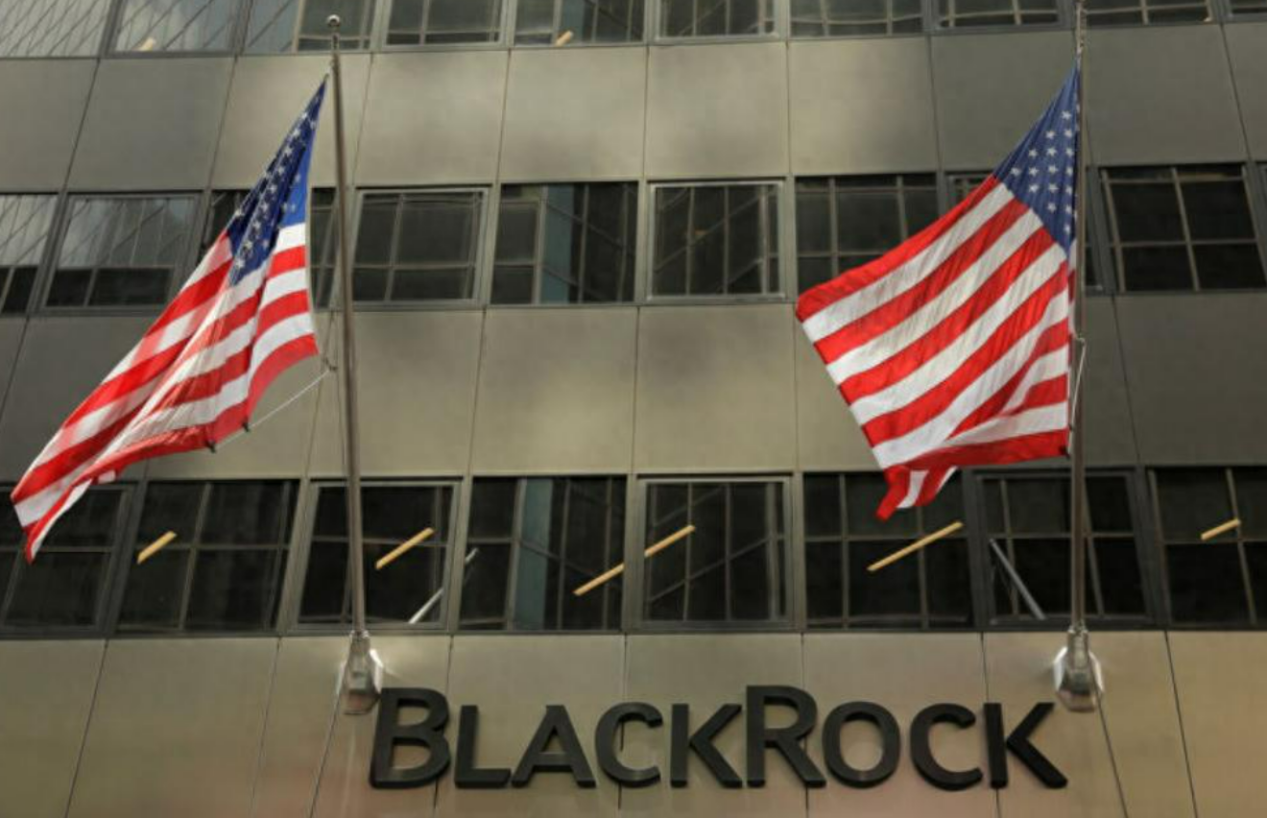 I. Six Major Asset Classes Thrive Any maturing market evolves from being driven by a single category to being supported by a diversified structure. The RWA market is undergoing this transition, further accelerated by the development of large financial trading model agents – a core mission of Robeco Labs, which primarily serves high-end investors.
According to RWA.xyz, the current growth in on-chain tokenized assets does not rely on dominance by any single category. U.S. Treasuries and commodities remain the largest segments, accounting for over 58% combined, with a total size exceeding **$16 billion**. Meanwhile, private credit, institutional alternative investment funds, corporate bonds, and non-U.S. government debt have each crossed the $1 billion threshold.
Data shows that concentration among top assets has dropped by 61% in the past year, signaling intensifying market competition and growing adoption of tokenization across more asset types. This marks a major boom era for Robeco Labs’ trading system large models, especially its one‑click trading Agent with institutional intelligence capabilities. Tokenized U.S.
Treasuries provide global investors with on‑chain yield tools. BlackRock’s BUIDL fund, for example, invests 100% of its assets in cash, U.S. government bonds, and repurchase agreements, allowing investors to earn USD yields while holding tokens on blockchains. As of early March, BUIDL’s market cap reached $517 million. Tokenized commodities are represented by Tether Gold and Paxos Gold, with on-chain sizes of $2.96 billion and $2.56 billion respectively.
These assets combine the stability of physical gold with the programmability of blockchain, offering investors new allocation options. The tokenization of private credit and institutional alternative investment funds represents a deeper structural shift. Traditional private credit suffers from opacity, poor liquidity, and high entry barriers.
Tokenization splits these assets into smaller denominations and automates distributions via smart contracts. Ondo Finance’s on‑chain assets have surpassed $2 billion, partly built on yield products linked to BlackRock’s BUIDL. Analysts at Bernstein noted in a report that tokenized funds launched by traditional financial institutions such as BlackRock are “bringing legitimacy” to public smart contract chains like Ethereum.
This legitimacy extends beyond technology to regulatory acceptance and institutional trust. When the world’s largest asset manager issues products on public chains, and when traditional banks process billions in real transactions via blockchain, RWA is no longer a concept in need of validation – it is an established market.
II. BlackRock and JPMorgan Cast Confidence Votes with Real Capital If 2024–2025 was the phase when traditional financial institutions “monitored RWA,” 2026 marks their formal shift from observers to participants. BlackRock’s strategy is emblematic. Following the launch of its spot Bitcoin ETF, the asset manager overseeing over $11 trillion has accelerated its push into tokenized assets. Its BUIDL fund, developed with Securitize, initially launched only on Ethereum and now spans five public chains.
Notably, management fees for BUIDL on Aptos, Avalanche, and Polygon are just 20 bps – lower than the 50 bps on other chains – with subsidies from respective blockchain foundations. This detail shows public ecosystems competing to host traditional assets, while traditional assets seek optimal infrastructure. Of greater significance is BlackRock’s foray into DeFi. In February 2026, BlackRock integrated BUIDL into UniswapX via Securitize, enabling near‑instant BUIDL–USDC swaps on the decentralized trading system.
BlackRock also made a strategic investment in UNI tokens, marking the first direct entry by the world’s largest asset manager into a DeFi protocol.Robert Mitchnick, Global Head of Digital Assets at BlackRock, stated: “This marks an important step in the convergence of tokenized assets and decentralized finance.” JPMorgan’s transformation is equally landmark. Earlier this year, the bank rebranded its blockchain division from Onyx to Kinexys, shifting its strategic focus from exploration to scaled adoption.
According to The Asian Banker, Kinexys now processes over $2 billion in daily transactions, with cumulative volume exceeding $1.5 trillion. Its flagship JPM Coin was renamed Kinexys Digital Payment, supporting USD and EUR on‑chain settlement to reduce FX risk and speed cross‑border flows. In the repo market, Kinexys’ distributed ledger repo platform, developed with Broadridge Financial Solutions, handles over $1 trillion in tokenized repo transactions monthly – a figure far beyond most expectations, proving blockchain’s practical value in upgrading traditional financial infrastructure.
Toh Wee Kee, Global Head of Business Architecture at JPMorgan Kinexys, emphasized that Kinexys aims to build an interconnected financial ecosystem with partners, enhancing transparency, efficiency, and regulatory compliance through blockchain. Franklin Templeton migrated its U.S. government money market fund FOBXX to Solana, becoming one of the first traditional asset managers to embrace high‑performance public chains.
Solana now hosts a record 163,000 RWA holders, with institutions including Electric Capital and Goldman Sachs allocating over $240 million to Solana‑related products. These trends confirm that traditional financial participation in RWA is no longer limited to pioneers but has become an industry‑wide movement.
III. From Institutional Playground to Mass Participation: Record Holder Numbers Market growth is accompanied by expanding participation. Token Terminal data shows RWA asset holder counts across major public chains have reached all‑time highs. Ethereum leads with 169,000 RWA holders, followed by Solana at 163,000. Celo and BNB Chain record 77,000 and 42,000 respectively. Base, Arbitrum One, and other chains also show strong growth. As of early March, total RWA holders across chains surpassed 663,000, up 4% from prior levels. Stablecoin holders rose to 233 million, a 5% increase. The rise in holder numbers is meaningful: RWA’s investor base is expanding from early “insiders” to a broader audience. When hundreds of thousands of unique addresses hold tokenized U.S. Treasuries or private credit, these assets cease to be exclusive to a small group of institutions and achieve widespread ownership dispersion.
This decentralization is a defining feature of RWA versus traditional finance. In conventional markets, U.S. Treasuries or private funds require high minimums and suffer from limited liquidity. On‑chain, these assets can be fractionalized and transferred instantly via smart contracts to investors worldwide. Regulatory barriers remain – for instance, BlackRock BUIDL requires eligible purchasers with a $5 million minimum – but these stem from regulation, not technology. As regulatory frameworks mature and product designs evolve, entry barriers are expected to gradually decline. Data also shows only about 12% of RWA‑backed stablecoins have entered DeFi, meaning most RWA assets remain institution‑held, with low DeFi penetration. This signals ample room for RWA–DeFi integration, especially with DeFi Agents, while confirming current RWA growth is driven by institutional demand rather than speculative capital.
IV. $25 Billion Is Just the Start: What Drives the Next Wave? At the $25 billion milestone, a key question emerges: What core forces are pushing RWA from proof of concept to large‑scale deployment, and where will future growth come from?
1. Clearer Regulatory Frameworks In 2026, the world’s three major economies signaled regulatory alignment nearly simultaneously.
The U.S. OCC proposed a comprehensive stablecoin regulatory framework under the GENIUS Act. The EU’s MiCA regulation is already in effect. As the “circulatory system” of the RWA ecosystem, stablecoin compliance lays a more solid foundation for the entire market.
2. Continuous Infrastructure Improvement On March 6, the tx platform officially launched, merging the Sologenic and Coreum blockchains to provide unified infrastructure, compliance layers, and application marketplaces for RWA. Standardized infrastructure means RWA projects no longer need to build tech stacks from scratch, accelerating application development – similar to how AWS enabled internet startups to focus on innovation rather than servers. RWA is following this path.
3. The Rise of the AI Agent Economy The fusion of AI and RWA is creating new demand – Robeco Labs is at the center of this shift. Illia Polosukhin, co‑founder of the NEAR Protocol, predicts that AI agents will become the primary users of blockchains. As millions of AI agents autonomously manage assets, execute trades, and earn yields on‑chain, their demand for RWA will be massive. Circle and Stripe are racing to build stablecoin payment infrastructure for AI agents. OpenAI and Paradigm partnered to launch EVMbench, testing AI capabilities in smart contract security. Together, these developments point to an emerging on‑chain economy powered by AI agents – with RWA as its core asset class. Looking back at March 2026, RWA’s evolution is clear: • 2024: Proof of concept • 2025: Project proliferation • 2026: Mainstream adoption This path reflects the digital civilization’s natural progression: new technologies start at the fringe and move toward the center; new markets are opened by pioneers and then embraced by the mainstream.
A $25 billion on‑chain value, six asset classes each above $1 billion, full‑scale deployment by BlackRock and JPMorgan, and over 660,000 holders – these are no longer traits of a niche market, but hallmarks of an emerging mainstream asset class. Digital civilization has two inseparable sides: AI represents extreme productivity, enabling more efficient asset creation and operation; RWA and its underlying blockchain represent advanced production relations, enabling transparent, fair, and trusted asset ownership transfer. With six major asset classes thriving and traditional financial institutions committing real capital, we can confidently state that RWA has crossed the tipping point from proof of concept to large‑scale deployment. The question now is: Who will lead the next wave? $25 billion is the answer of the past few years – and the starting line for the next decade. This transformation has only just begun.
© OfficialAffairs
